
Virtual Influencers: The Future of Influence?
Virtual influencers (AI-generated or digitally produced characters) are becoming a real thing, a strategic extension of how brands create, scale content. But do they really represent the future of influencer marketing, or simply one part of a bigger evolution?
Let’s breaks down the role of virtual influencers through a branding lens: scalability, brand control, authenticity, long-term impact.
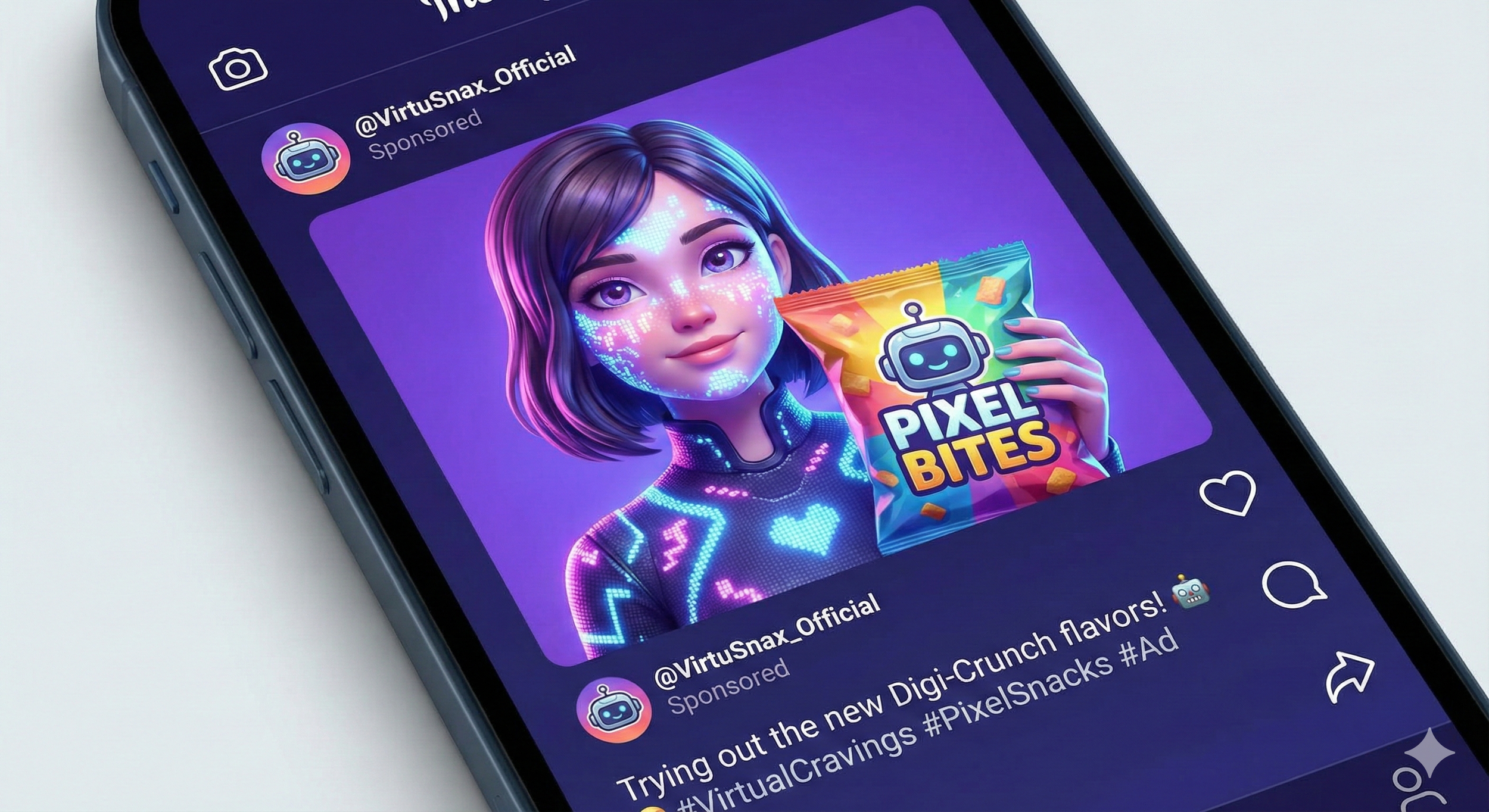
Why Virtual Influencers Are Rising
Infinitely Scalable Content Pipelines. Virtual creators can appear in any location, outfit, or storyline without physical logistics. Combined with improved 3D modeling and generative AI, brands can produce high-volume, high-quality content with minimal friction. [1]
Full Brand Safety & Controlled Messaging. Every post, expression, and narrative is scripted. For categories where compliance and tone safety are critical, virtual influencers offer zero unpredictability.
Reduced Production Costs Over Time. Once built, a virtual creator becomes a reusable asset. As rendering tools become cheaper, brands can produce cinematic-quality visuals without recurring shoots, long timelines, or premium creator fees.
Virtual Influencers’ Unique Edge
Appear in multiple campaigns simultaneously
Shift instantly between aesthetics, worlds, or storylines
Maintain perpetual consistency in tone and persona
Produce unlimited revisions without fatigue
Operate across global time zones, 24/7
The Limits
Even the most advanced synthetic creators lack one core driver of influence: emotional credibility.
Human creators build trust through lived experiences, imperfections, vulnerability, and the micro-moments that feel real. We’ve seen this pattern before during COVID: many believed virtual events would permanently replace in-person gatherings, yet once restrictions lifted, people craved real connection, travel, and face-to-face interaction more than ever.
For categories like wellness, parenting, lifestyle, beauty, and identity-driven communities, that human authenticity is still irreplaceable.
Virtual influencers can entertain, inspire, and scale, but they still struggle to create the deep human resonance that drives conversion and loyalty.
The Middle Ground
The real future we see lies in integration. Emerging technologies enable human creators to scale their presence intelligently:
AI doubles/digital twins for faster content output
Co-hosted AI personas that maintain community engagement
Virtual extensions that allow creators to appear in premium settings
Mixed-reality storylines that blend real and synthetic creativity
AI-assisted production workflows that cut costs without losing authenticity [2]
This hybrid model can deliver both human trust and AI scalability.
What about in the Future?
We believe virtual influencers are a part of the future but not the entire future. They will thrive in categories driven by storytelling, imagination, or evergreen brand aesthetics. Human creators will continue to lead in categories driven by trust, relatability and lived experience.
The true evolution of influencer marketing is the fusion of human creativity with emerging technology, enabling brands to produce richer narratives, safer content, and more scalable creator partnerships.
References
Meta’s internal research on AI-assisted content development
“State of Synthetic Media” trend reports from major tech conferences